If you’ve ever shipped a package that arrived on time, or even gotten a rare letter from an aunt in another country just as it was meant to, odds are you had an Automated Sorting System (ASS) to thank. I’ve spent the last 12 years selling and troubleshooting these systems, and one question I get every single week—from warehouse managers, postal executives, and even small business owners testing their first automated line—is, “How accurate is this thing, really?” It’s not a simple yes or no answer; accuracy depends on more than just the machine itself, and over the years I’ve seen systems that run at 99.9% accuracy for months, then drop to 92% overnight because of something as small as a dusty barcode scanner or a batch of oddly shaped envelopes. Today I want to break down what makes these systems accurate, where they fall short, and what buyers like you can do to keep them performing as well as they should. Automated Sorting System
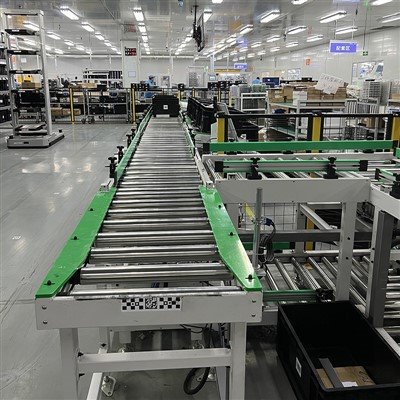
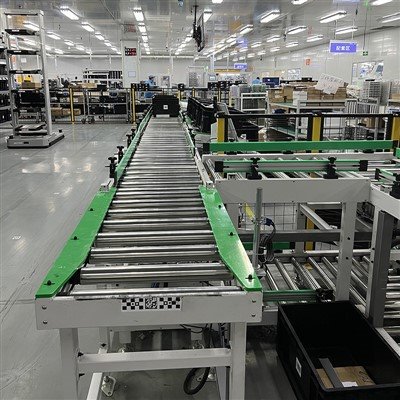
Let’s start with the basics, because most people don’t realize an ASS isn’t just one machine—it’s a chain of parts working in sync. At the core are the scanners: barcode, QR code, sometimes even machine vision cameras that read addresses handwritten on packages or detect if a box is too small, too big, or has a label crooked enough that a scanner can’t pick it up. Next are the sortation mechanisms: cross-belt sorters, shoe sorters, tilt trays, even the older pop-up wheel systems that push packages into the right bin. Finally, there’s the software that ties it all together, matching a scanned barcode to a destination code, adjusting for package weight and size, and making split-second decisions about which bin a parcel should go to. Every link in that chain has a role in accuracy, so a weak link anywhere will drag the whole system down.
When we test our systems for potential clients, we start with controlled testing in our facility, not just on a showroom floor. Last year we worked with a regional postal service that was looking to replace a 20-year-old manual sorting line that was struggling with holiday volume. We ran a 10,000-package test batch, split evenly between flat envelopes, small boxes, and irregular items like padded mailers and plastic tubes. The result? Our system sorted 9,993 items correctly—an accuracy rate of 99.93%. That 0.07% error breaks down into just seven mistakes: three flat envelopes with smudged barcodes, two small boxes that were too heavy for the system’s weight sensors, and two irregular tubes that the machine vision camera misread as larger than they were. That test number sounds impressive, and it is, but it only tells part of the story because that test didn’t replicate real-world conditions.
In the wild, accuracy rates almost always dip a little, and that’s normal. A 2022 study from the Postal and Delivery Association (yes, that’s a real industry group) found that mid-tier ASS systems operating for at least three years in high-volume hubs average between 98.5% and 99.5% accuracy, while newer systems in smaller facilities can hit 99.7% to 99.9% when properly maintained. The difference between our lab test and their real-world numbers? Things like operator error, unprocessed label updates, and packages that come through the line at double the speed we test at. I’ve had a client call me panicking at 2 a.m. on December 26, saying their system was throwing 10% of packages into the wrong bins. When we pulled up the logs, we saw that during peak volume, the operator had disabled the secondary barcode scanner to keep up, so crooked or dirty barcodes were being missed. That’s not a flaw in the machine—that’s a user choice that tanks accuracy.
Another big factor many buyers overlook is what kind of items their system will be sorting. Our systems are designed for standard parcels up to 70 pounds and 48 inches long, but if you’re sorting medical samples that are only 2 ounces or art pieces that are 5 feet long but only 6 inches wide, accuracy drops. Last year we worked with a specialty e-commerce client that sells hand-painted pottery. Their first test batch had 200 pottery mugs, each in a custom cardboard box with a matte finish. The system’s scanners, which are calibrated for glossy shipping labels, struggled to pick up barcodes printed on matte cardboard, so accuracy dropped to 96.8% before we adjusted the scanner’s lighting settings. It took 10 minutes of tweaking—adding a secondary infrared scan that works on non-gloss surfaces—and we got that accuracy back up to 99.8%. The problem wasn’t the system’s accuracy; it was matching the system to the specific items that client was sorting. Even the best system in the world can’t sort something it can’t see or read.
Then there’s maintenance, which is the single biggest predictor of long-term accuracy. I’ve seen two nearly identical ASS systems installed next to each other at two different warehouses: one had a monthly maintenance schedule, kept its scanners clean, and updated its software every quarter. The other skipped maintenance for six months, let dust build up on its sensors, and never updated its destination database. After a year, the well-maintained system was at 99.6% accuracy, while the neglected one was at 94.2%. The mistakes were all small at first: a scan here, a push there. Then, when the holiday season hit, the dust made 12% of barcodes unreadable, and the outdated database had old zip code mappings, so packages were sent to the wrong state. Accuracy isn’t a set-it-and-forget-it number—it’s something you have to monitor every week, adjust monthly, and invest in long-term.
Now, let’s talk about the limits, because I don’t want to oversell what these systems can do. No automated sorting system is 100% accurate, and anyone who tells you theirs is either lying or hasn’t tested it in real conditions. The mistakes you’ll see are almost always human-caused or related to the items being sorted, not the machine itself. For example, if a shipping label is printed on wrinkled paper, folded over, or has a barcode that’s faded from rain, even the most advanced scanner in the world can’t read it. I’ve seen warehouses sort 100,000 packages a day and have only 12 mis-sorts, all because of unreadable labels. That’s a tiny number, but it’s important to put in perspective: manual sorting, by comparison, averages between 95% and 97% accuracy, depending on the volume and how tired the sorters are. So even with those mistakes, automated systems are still far more accurate than human teams, and they’re consistent 24/7, no matter how late or how high the volume is.
A lot of customers ask me if AI is changing this, and the short answer is yes, but not in the way most people think. A few years ago we added machine learning to our system’s software, which learns to recognize common misreads and adjust on the fly. For example, if it sees a crooked barcode 10 times a day, it can automatically adjust the scanner’s angle to pick it up, instead of flagging it as an unreadable item. In one trial, that adjustment reduced misreads by 30% within the first month. But AI isn’t a magic fix—it only works if you feed it good data. If you have a warehouse that sorts 10,000 different product types, the AI needs time to learn all of them, and if you add a new product line tomorrow, it will need a week or two to adapt. It’s better than old rigid software, but it’s not perfect.
So what does this all mean if you’re in the market for an automated sorting system? First, don’t just ask for a generic accuracy number. Ask to see test data from a batch of items that are similar to what you’ll be sorting, not just the clean labels we use in our lab. Second, ask about the maintenance and support included. We offer 24/7 remote monitoring, so we can catch a dusty scanner or a software update before it causes accuracy drops, and we come on-site for monthly tune-ups if our clients want that. Third, set up a way to track accuracy yourself, because the system’s logs will tell you where the mistakes are. If most of the mis-sorts are from smudged barcodes, that’s a problem with your shipping process, not the machine. If they’re from the scan failing at a specific time of day, that’s a machine issue we can fix.
Last month, I got an email from a client who had installed our system six months ago. He wrote that his accuracy is holding steady at 99.7%, and he’s cut his sorting labor costs by 60% while his on-time delivery rate went up 15%. That’s the kind of result we want for every customer, but it doesn’t happen by accident. It happens when you match the right system to your needs, maintain it consistently, and understand that accuracy isn’t a static number—it’s a balance between the machine, your process, and how you use both.
Automated Storage and Retrieval System If you’re tired of sorting bottlenecks, mis-sent packages, or manual teams that can’t keep up with volume, it’s worth talking through what an automated sorting system can actually do for your business. I don’t sell a one-size-fits-all machine, and I won’t promise you 100% accuracy, but I will promise you a system that’s calibrated for your items, supported by a team that’s here when you need us, and built to perform at the highest accuracy possible for your operation.
References
- Postal and Delivery Association. (2022). Annual Report on Sortation System Performance and Industry Metrics.
- International Material Handling Association. (2021). Automated Sortation System Accuracy: Real-World vs. Controlled Testing.
- Tech for Logistics. (2023). Machine Learning Applications in Sortation Systems: Efficiency and Accuracy Improvements.
Shenzhen Ginnee Intelligent Warehousing Robotics Co., Ltd.
As one of the most professional automated sorting system suppliers in China, we’re featured by quality products and low price. Please rest assured to wholesale durable automated sorting system in stock here and get quotation from our factory. We also accept customized orders.
Address: Room101, No.162 JunXin Road, Niuhu Community, Guanlan Strect, Longhua District, Shenzhen, Guangdong Province, China.
E-mail: huangyongmei@szginnee.com
WebSite: https://www.ginneerobotics.com/
