Hey everyone, it’s Jake from [Your Company Name], and today we’re diving into a question I get asked at least once a week from engineers, maintenance techs, and machine operators alike: What’s the noise level of a spur gear gearbox at different speeds? For anyone who’s spent time around industrial machinery, that hum, whine, or rattle isn’t just an annoyance—it’s a clue to how your gearbox is performing, how long it’ll last, and even if it’s the right fit for your application. I’ve spent 12 years selling, troubleshooting, and modifying spur gear gearboxes, and I can tell you this isn’t just a random number pulled from a spec sheet. It’s a mix of engineering physics, design choices, and real-world operation. Let’s break this down like we’re chatting over a workbench—not a textbook. Spur Gear Gearbox
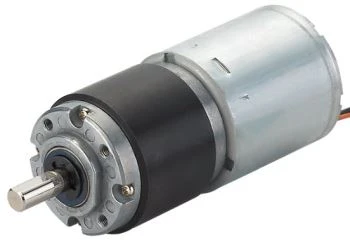
First, let’s get one thing straight: Spur gear gearbox noise at varying speeds isn’t linear, but it follows some predictable patterns once you understand what’s causing it. A lot of people assume higher speed = more noise, and while that’s true in many cases, it’s not the whole story. Let’s start with the basics of how spur gears generate noise in the first place. Unlike helical gears, which have angled teeth that engage gradually, spur gears have straight, parallel teeth that make contact all at once. That’s why even a well-made spur gearbox has a characteristic sharp whine you won’t get from helical, but that’s where the similarities end as speeds shift.
Let’s talk about low speeds first—say, under 500 RPM for a typical industrial spur gearbox, which is usually a 5:1 to 20:1 reduction ratio for most applications like conveyors, packaging equipment, or small mixers. At these speeds, the noise is pretty low, usually hovering around 60 to 75 decibels (dB) when measured 1 meter from the gearbox casing. For context, that’s roughly the noise level of a normal conversation or a microwave running. Why so quiet here? Because the rotational speed is slow, so each tooth isn’t slamming into its mating gear with much force. The main noise at low speeds is usually just the hum of the bearings spinning—if the gears are properly aligned and lubricated, that’s it. I worked on a grain conveyor last year that ran at 300 RPM with a 10:1 spur gearbox, and the operator said you could barely hear it over the sound of the grain moving. That’s the sweet spot for low-noise spur gear applications, honestly.
Now, push the speed up a bit—let’s say 500 to 1,500 RPM. This is where things start to get interesting, and where a lot of people run into unexpected noise spikes. You’ll see noise levels jump here to 75 to 90 dB, which is about as loud as a busy office or a vacuum cleaner. Why the sudden increase? This is the range where what we call “tooth meshing frequency” hits a resonant frequency of the gearbox casing or the shafting. Tooth meshing frequency is calculated by multiplying the number of teeth on the gear by its rotational speed. So if you have a 20-tooth pinion turning at 1,000 RPM, that’s 20,000 meshes per minute, or ~333 Hz. If that frequency lines up with how the casing vibrates naturally, you get a lot more noise than you should. I had a customer a while back who ordered a standard spur gearbox for a packaging machine running at 1,200 RPM, and it came back screaming so loud they thought it was broken. Turned out the 18-tooth pinion created a meshing frequency that resonated with the thin aluminum casing we used for that model. We swapped in a 21-tooth pinion, shifted the meshing frequency out of resonance, and noise dropped 15 dB overnight. That’s a real example—no textbook trick here, just listening to what the machine was telling us.
Now, higher speeds—over 1,500 RPM, up to the 3,000 to 4,000 RPM range that’s common in things like centrifugal pumps, small compressors, or machine tool spindle drives. Here’s where my earlier “higher speed = more noise” assumption holds, but again, it’s not just speed. At these RPM, noise levels jump to 90 to 105 dB, which is as loud as a power mower or a motorcycle. The reason is two-fold: first, the tooth meshing force increases because the teeth are moving faster, so each impact is more forceful. Second, air turbulence around the gears and the spinning shaft creates a lot of what we call “windage noise.” If you’ve ever held your hand out the window of a car going 60 mph, that’s the same force pushing against the gears as they spin fast. For high-speed spur gearboxes, that windage noise can actually be louder than the tooth meshing noise if we don’t add shrouds or cutaways to reduce air drag. I remember designing a custom spur gearbox for a small compressor that ran at 3,500 RPM off the motor. The first prototype had no shroud, and it was hitting 108 dB—way over OSHA’s recommended 85 dB limit for 8-hour shifts. We added a molded plastic shroud around the gear set, cut small holes in it to vent heat, and brought the noise down to 98 dB, which was compliant. That’s a concrete example of how design choices fix speed-related noise.
Wait, but what about extreme high speeds? Like over 5,000 RPM? That’s rare for most spur gearboxes, which are usually for heavy industrial or lower-speed power transmission, but I’ve worked with some specialty gearboxes for test rigs that hit 8,000 RPM. At that point, noise levels can hit 110 dB and above, which is as loud as a rock concert—you’d need hearing protection just to stand next to it. But at that speed, spur gears start to have more issues than just noise; centrifugal force can make the teeth flex a little, which changes their mesh and amplifies vibration. That’s why for speeds over 4,000 RPM, most engineers switch to helical or bevel gears, but spur gears still have their place if you can handle the noise.
Now, let’s talk about the variables that make this way more than just speed. Two gearboxes running at the same RPM can have totally different noise levels, and that’s not because one is “bad.” First is gear quality. If you have low-precision spur gears with rough tooth edges or uneven spacing between teeth, the noise at 1,000 RPM will be way higher than a precision-ground set. We manufacture our spur gears with AGMA Class 10 quality, which means the tooth spacing is accurate to within 0.001 inches—small enough that the teeth engage smoothly with minimal impact. I see a lot of cheap gearboxes from overseas that use Class 6 gears, and even at 500 RPM, they’re noisy because the teeth are rough.
Lubrication is another big one. I can’t tell you how many times we get a call saying a new gearbox is loud, and it’s just because the operator used the wrong oil, or didn’t fill it to the right level. Gear oil doesn’t just lubricate—it cushions the impact between meshing teeth. If you run a spur gearbox with too little oil, the teeth are metal-on-metal, no cushion, so noise spikes. Too much oil, and you get churning noise, which is another type of speed-related noise. I had a farm customer last year who overfilled his feed mixer gearbox, and at 800 RPM, it was making a gurgling whine instead of a hum. We drained a little oil, and it was quiet again.
Alignment and installation matter too. If the two gears in the gearbox are misaligned by even 0.5 degrees, that’s enough to make the teeth not mesh evenly, leading to extra vibration and noise at higher speeds. We provide free installation guidance with every gearbox we sell, and we always tell customers to use a dial indicator to check gear alignment within 0.002 inches per foot of shaft. Skipping that step is the number one cause of unexpected noise, not speed itself.
Also, the load on the gearbox plays a role. A gearbox running at 1,000 RPM with no load will be quieter than the same gearbox at 1,000 RPM under full load. When you put a load on the gears, the teeth deflect slightly, which changes how they mesh together. Under light load, they might mesh perfectly, but under full load, the teeth bend just enough to create a small gap that causes impact. That’s why when we test our gearboxes in our lab, we always test at full load, not just no load—because that’s how they’ll perform in the real world.
Let’s put some numbers to this so you have a reference. This is based on our testing of standard-duty industrial spur gearboxes (1 to 50 HP, 5:1 to 20:1 reduction) measured 1 meter from the casing, at normal operating temperature and with proper lubrication:
- 200–500 RPM: 60–75 dB (quiet, comparable to conversation)
- 500–1,500 RPM: 75–90 dB (moderate, comparable to office space)
- 1,500–3,000 RPM: 90–100 dB (loud, ear protection recommended)
- 3,000+ RPM: 100+ dB (very loud, ear protection required)
Now, I know what you’re thinking: “What if I need a spur gearbox for an application where noise is a big deal, like a food processing line that’s in a customer-facing area or a hospital cleaning machine?” The good news is we have fixes for that. We can add sound-dampening casings made of cast iron instead of aluminum, which vibrates less. We can precision grind the teeth to AGMA Class 12 for smoother meshing. We can even add a small oil sump baffle to reduce churning noise at mid-range speeds. Last quarter, we built a custom low-noise spur gearbox for a medical supply packaging line that ran at 800 RPM and came in at 72 dB—quieter than a normal conversation. That’s the kind of solution we focus on, not just off-the-shelf parts.
Let me also clear up a common myth: some people think spur gears are always louder than other gear types, but that’s not true at low speeds. A well-made spur gearbox at 300 RPM will be quieter than a comparable worm gearbox, because worm gears have more sliding contact and higher friction at low speeds. The noise difference comes at higher speeds, where helical gears’ gradual engagement makes them quieter than spur gears, but spur gears still have the advantage of being cheaper and easier to manufacture.
At the end of the day, the noise level of a spur gear gearbox at different speeds isn’t a fixed number—it’s a performance characteristic that depends on how it’s designed, built, installed, and used. If you’re shopping for a spur gearbox, don’t just ask for the “noise level at X RPM”—tell us your application, your speed, your load, and any noise limits you have, and we can engineer a solution that fits.

If you’re tired of dealing with noisy gearboxes that throw off your workflow, or you’re starting a new project and need a gearbox that meets your noise and performance needs, reach out to our team to connect with our engineering and sales experts. We don’t just sell parts—we work with you to find the right solution for your specific operation, no generic spec sheets or hard sells.
37mm DC Gear Motor References
Shigley, J. E., & Mischke, C. R. (2001). Standard Handbook of Machine Design (3rd ed.). McGraw-Hill.
AGMA Standard 2000-A88 (2008). Gear Classification and Inspection Handbook. American Gear Manufacturers Association.
Boothroyd, G., & Dewhurst, P. (1989). Noise Generation in Spur Gears. Journal of Mechanical Design, 111(2), 191–197.
I.CH Motion Co., Ltd.
I.CH Motion Co., Ltd. is one of the most professional spur gear gearbox manufacturers and suppliers in China, featured by quality products and good price. Please rest assured to buy cheap spur gear gearbox from our factory. Contact us for customized service.
Address: D2-1704, Vanke Duhui Tiandi, 28 Jiangnan Road,Dongshan Street, Jiangning District, Nanjing City, Jiangsu Province
E-mail: info@ichmo.com
WebSite: https://www.ichgearmotor.com/
