Hey there, Rollstock Films

If you’ve ever worked with packaging, processing, or even material handling, you’ve probably heard of rollstock films—those flexible, rollable materials that make up everything from food pouches to industrial component wraps. But today, I want to talk about something that trips up a lot of people when they’re sourcing these: the coefficient of friction (or COF, for short) of rollstock films. As a rollstock film supplier, I get asked about COF all the time, and it’s not just a random number you pull out of a spec sheet. It’s a make-or-break detail that can mess up your production line, your packaging process, or even how your products perform once they’re out on the shelf.
Let me start with the basics. What even is COF? Simply put, it’s a measure of how much friction exists between two surfaces when they slide past each other. For rollstock films, that usually means two types: static COF (the friction needed to start sliding one film layer against another, or the film against a metal machine part) and kinetic COF (the friction needed to keep that sliding going once it’s started). Think of it like this: static COF is the effort it takes to push a parked car, and kinetic COF is the effort to keep it moving down the road. If one’s too high or too low, bad things happen.
Now, why does this matter for rollstock films specifically? Let’s say you’re running a vertical form-fill-seal (VFFS) machine—super common for bagged snacks, frozen foods, even liquid pouches. If the COF of your rollstock is too high, the film won’t feed smoothly through the machine. It’ll stretch, stick, or jam halfway, wasting material and slowing down your line. I’ve had clients come to me after switching to a cheap rollstock that had way too high a static COF; their line was down for 3 hours one afternoon, costing them thousands in lost production. On the flip side, if COF is too low? The film might be so slippery that it unwinds too fast, gets misaligned, or even slips in the sealer, leading to bad seals or misprinted packaging. For clamshell packaging or industrial wrap, low COF can also mean the film shifts during shipping, damaging whatever’s inside.
So, what determines the COF of rollstock films? It’s not a one-size-fits-all number. Most rollstock films are made from things like polyethylene (PE), polypropylene (PP), or polyester (PET), and each base material has its own natural COF. For example, raw low-density PE (LDPE) is pretty slippery—natural kinetic COF around 0.2 to 0.3—while PP is a bit rougher, closer to 0.3 to 0.4. But here’s the thing: we can adjust that. Additives are the key. If a client needs a lower COF for smooth feeding, we slip in slip agents—usually things like erucamide or oleamide, which migrate to the film’s surface and create a slippery layer. If they need a higher COF, maybe for a non-slip label or for films that need to stick together on a roll, we add anti-slip agents, like talc or fatty acid amides that increase friction.
Wait, but not all additives work the same. I always tell clients to be careful with overdoing slip agents. Too much can make the film hard to handle before it’s even used—like, if you’re printing on it, the ink won’t stick because the surface is too slippery. Or if you’re stacking rolls, they’ll slide around on the pallet and get damaged. That’s a common mistake: people just pick a random “low COF” number without thinking about the downstream steps. For example, a food packaging client might need low COF for their VFFS line, but they also need their print and adhesive to bond well, so we balance the slip agent level to hit a kinetic COF of 0.25 (just right for feeding) without making it too slippery for printing.
Another big factor is the film’s structure. Co-extruded films—those with multiple layers, like a food-safe inner layer and a printable outer layer—have COF that depends on the top layer, not the inner. If a client is wrapping heavy items, we might make a co-ex film with a high-tension inner layer that has a slightly higher COF to prevent slippage against the product, and a low-friction outer layer for smooth line feeding. Even the surface texture matters: matte films have a rougher surface, so their COF is higher than glossy ones. That’s why some people complain that their matte rollstock jams more—they didn’t account for the texture’s impact on friction.
Now, let’s talk about how COF is tested, because the numbers on a spec sheet aren’t just made up. The standard test for rollstock films is ASTM D1894, which uses a sled with a known weight sliding across a film sample. You measure the force needed to move it, divide by the weight, and that gives you COF. Static is the force to start, kinetic is the force to keep moving. But here’s a heads up: test conditions matter a lot. If you test a film at 25°C (room temp) vs. 35°C (like a hot warehouse), the COF can change. Slip agents work better at higher temps, so a film that’s 0.2 COF at room temp might drop to 0.15 when it’s hot, which could cause that unwinding problem I mentioned earlier. Humidity too—for films with hydrophilic additives, high humidity can make the surface stickier, raising COF. That’s why when I work with a client, I always ask about their storage and production conditions, not just what machine they use.
What’s a “good” COF for rollstock? It depends entirely on the use case. Let’s break down common scenarios:
- VFFS machines (snack bags, frozen foods): Kinetic COF of 0.2 to 0.3. Too high, jams; too low, misfeeds.
- Horizontal form-fill-seal (HFFS) for rigid packaging: A bit higher, 0.25 to 0.35, because you don’t want the film sliding in the seal too much.
- Stretch wrap or industrial wrap: Lower COF, 0.15 to 0.25, so it unwinds smoothly from the roll.
- Label stock or non-slip packaging: Higher COF, 0.4+, so labels stick and the package doesn’t slide.
I’ve had clients come to me saying, “I need a COF of 0.2” without explaining why, and it doesn’t always fit. Once, a small craft brewery wanted rollstock for their can liner, and they thought lower COF would be better. But their canning line runs at cool temps, and the liner needed to stick to the can’s interior to avoid shifting during shipping. We adjusted the slip agent just a touch, bringing COF to 0.3, and their problem was solved—no more shifting liners, no more line jams.
Another common question: Can COF change over time? Yes! Slip agents take time to migrate to the surface, so a fresh rollstock right after manufacturing might have a higher COF (the raw material) than it does after a few days. That’s called “conditioning.” If you buy rollstock and use it immediately, you might need to let it sit for 48 hours before testing, or adjust your machine’s settings. Also, if the film is stored in a cold, dry place, slip agents move slower, so COF stays higher. I always tell clients to note when they received the rolls—if they’re using brand new ones, don’t be surprised if the COF is a bit higher than the spec sheet says; that’s normal.
So, as a supplier, how do I help clients get the right COF? It’s all about communication. I don’t just send a spec sheet and say “here’s your rollstock.” I ask: What machine are you using? What’s your line speed? Where will the film be stored (temp/humidity)? What’s it going to hold? Do you need to print on it? Do you need seals that stick? Once I know all that, I can adjust the additives and film structure to get the exact COF they need, without sacrificing other properties like seal strength, printability, or food safety.
For example, last year a client was running a high-speed VFFS line for frozen vegetables. Their old rollstock had a COF of 0.28, which was just on the high end of their line’s tolerance, so they were getting a jam every 10 minutes. We switched them to a co-ex film with a slightly higher LDPE content and a small amount of slip agent tailored for cold temps—brought kinetic COF to 0.24, and their jam rate dropped to almost zero. They saved over $1,000 a week in lost production. That’s the kind of win that comes from understanding COF, not just picking a number.
If you’re shopping for rollstock right now, don’t just fixate on the cheapest price or a random COF number. Ask your supplier to explain how they adjusted the COF, what additives they used, and how that will work with your specific setup. And don’t be afraid to share your pain points—if your line jams, or films shift, that’s probably a COF issue, and a good supplier can help you fix it, not just sell you a roll.
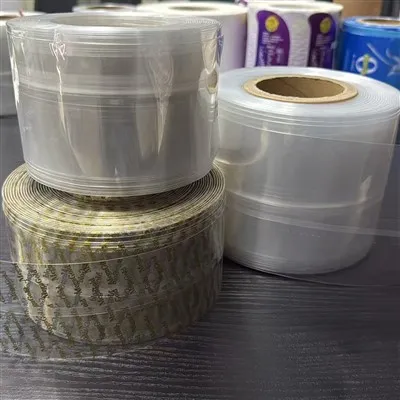
At the end of the day, rollstock films are only as good as their ability to work with your equipment, and COF is a huge part of that. It’s not just a technical detail—it’s what keeps your line running smoothly, your products packaging correctly, and your costs down. If you’re dealing with COF headaches, or just want to make sure your next rollstock is set up right, hit us up to chat through your needs.
Self-adhesive Printing Paper References:
ASTM D1894, Standard Test Method for Static and Kinetic Coefficients of Friction of Plastic Film and Sheeting
Modern Plastics Handbook, 5th Edition, “Flexible Packaging Materials”
Journal of Plastic Film and Sheeting, Volume 36, Issue 2, “The Impact of Slip Agents on Film Performance and Processability”
Nanjing Green Label Printing Co., Ltd.
We are one of the most professional rollstock films manufacturers and suppliers in China, also support customized service. We warmly welcome you to wholesale high quality rollstock films at competitive price from our factory. For pricelist and quotation, contact us now.
Address: No. 116-3 Suyuan Avenue, Jiangning District, Nanjing
E-mail: greenlabel@126.com
WebSite: https://www.chinalabelprint.com/
