If you’ve ever found yourself deep in construction, agriculture, or mining, odds are you’ve stared at a used rough terrain forklift at some point—either as a workhorse you depend on or a piece of equipment you’re trying to justify adding to your fleet. As a third-generation rough terrain forklift supplier with over two decades in this space, I get the questions that cross every operator, fleet manager, and small business owner’s mind when they start searching: Are there actually reliable used rough terrain forklifts for sale that don’t come with hidden headaches? Spoiler alert: The answer is yes, but only if you know where to look, what to vet, and how to separate a steal from a money pit. Let me walk you through what I’ve learned from showing these machines to operators across 12 countries, because this isn’t just about selling equipment—it’s about helping you work smarter. Rough Terrain Forklift

First, let’s talk about why used rough terrain forklifts make so much sense, especially for businesses that don’t need a brand-new machine right out of the box. A brand-new rough terrain forklift can set you back $70,000 to $120,000, depending on lift capacity, terrain adaptability, and add-ons like enclosed cabs or side-shift attachments. For a small construction firm wrapping up a seasonal highway project, a mid-sized farm moving hay bales across uneven pasture, or a mining crew hauling ore in remote areas, that price tag is hard to stomach when you only need the machine for 500 to 1,000 hours a year. Used models, on the other hand, typically cost 40% to 60% less than their new counterparts, which frees up cash for other critical costs—like labor, fuel, or parts for other equipment.
But here’s the thing: not all used rough terrain forklifts are created equal. A machine that’s been working in a salt mine in Utah for 8 years is a very different investment than one that’s spent the same 8 years on a well-maintained tree farm in the Pacific Northwest. That’s why, as a supplier, I make it a rule to walk the shop floor with every forklift we sell before it ever reaches a customer. I don’t just look at the hour meter—though that’s a baseline— I check for signs of neglect, like rust on the mast, worn-out tires that can’t grip uneven ground, or leaks under the engine that could turn into costly repairs before you even drive it off the lot.
Let’s break down what makes a rough terrain forklift “rough terrain” in the first place, because that’s the first mistake people make when shopping used. Unlike warehouse forklifts that run on smooth concrete, rough terrain models are built to handle loose gravel, mud, steep slopes, and uneven dirt. That means they have larger, knobby tires (usually pneumatic or solid rubber), a higher ground clearance (at least 12 inches, preferably more), and a 4-wheel drive system to keep them stable on inclines. When shopping used, skip any machine that was originally designed for warehouse use and retrofitted to handle dirt—those will tip on a sloped construction site faster than you can say “load capacity.” Stick to models from reputable manufacturers that specialize in rough terrain equipment: names like JLG, Case, John Deere, and Komatsu, which have built these machines to withstand daily abuse for decades.
Now, where do you find these used rough terrain forklifts? I’ve seen customers waste hours scrolling through generic online marketplaces, sifting through listings for old farm equipment that’s barely running, because they don’t know to target the right channels. The best places are specialized heavy equipment dealers like ours, auctions that focus on construction and agricultural equipment, and direct from local businesses that are upgrading their fleets. Generic marketplaces are hit-or-miss because anyone can list a machine, even if they’ve never maintained it. At our company, we only source used rough terrain forklifts from verified sellers—we’ll ask for maintenance logs, service records, and even let you talk to the previous owner if you want to confirm how the machine was used. Last year, we sold a 2018 JLG 1054 to a small road crew in Ohio that had a full set of service records: the previous owner replaced the engine at 3,500 hours and did a full mast rebuild at 2,000 hours. That’s the kind of transparency you don’t get on a random online listing.
When you’re evaluating a used rough terrain forklift, here are the non-negotiables I never skip, and I teach every customer to ask for:
First, verify the lift capacity. A lot of used listings will advertise a lift capacity that’s only true on level ground. For rough terrain, the rated capacity drops significantly on slopes—usually by 20% or more for every 10 degrees of incline. If you’re lifting 10,000 pounds on a 5-degree slope, a machine rated for 10,000 pounds on level ground will only handle around 8,000 pounds. So when you’re shopping, ask for the slope-rated capacity, not just the flat-rated number. That’s a trick a lot of unethical sellers will hide, so don’t be afraid to push on it.
Second, check the undercarriage and frame. Rough terrain forklifts take a beating from rocks, mud, and uneven ground, so cracks or rust on the frame are huge red flags. Even a small crack in the frame can turn into a major safety hazard if it’s not repaired by a certified technician. We have a full-service shop on site, so every used forklift we sell gets a frame inspection by a certified technician before it goes out—we’ll weld any small cracks and treat rust before it spreads, so you don’t have to worry about that.
Third, test drive it. This is the step most people skip when shopping used, but it’s the most important. You wouldn’t buy a used car without driving it, so why buy a used forklift without operating it? When you test drive, take it over uneven ground, up a small slope, and test the hydraulics by lifting a heavy load (or a test weight we provide) to make sure it’s smooth and responsive. A machine that jerks when lifting or has slow hydraulics could have a worn pump or cylinder, which will cost thousands to replace. Last quarter, a customer from Minnesota test drove a 2019 Case 586G at our facility and noticed the hydraulics were slow—we pulled it apart and found a worn seal, which we replaced for free before he took it home, and he still saved 50% over a new model.
Another thing to consider when buying used rough terrain forklifts is add-ons and attachments. A lot of operators don’t realize that a forklift with a side-shift attachment or a fork positioner is way more versatile than a basic model, especially if you’re loading and unloading trailers in tight spaces. We usually offer optional attachments for our used forklifts, like snow buckets for farms in cold climates or grapples for moving large debris at construction sites, so you can customize the machine to your needs without paying for a brand-new setup.
Now, let’s talk about common misconceptions that trip up buyers. The biggest one is that “hour meter hours equal condition.” That’s not true—an hour meter on a machine that only works on light, flat farmland will last longer than one that works 10 hours a day in rocky construction sites. A machine with 5,000 hours that’s been regularly serviced is often a better buy than one with 2,000 hours that’s been neglected. That’s why maintenance logs are so critical—they tell you if the oil was changed every 200 hours, if the hydraulic fluid was flushed, and if any major parts were replaced. At our company, we provide a full service report with every used forklift we sell, so you know exactly what you’re getting.
Another misconception is that used rough terrain forklifts have high repair costs. While it’s true that any used machine will need some maintenance, if you buy from a reputable dealer, most repair costs are covered by warranties. We offer 30-day limited warranties on all our used rough terrain forklifts, and we have a network of certified technicians across the country who can service your machine if something goes wrong. That way, you don’t have to worry about being stuck with a machine that breaks down on a job site with no one to help you.
If you’re still on the fence about used vs. new, let’s look at some real numbers. A new JLG 1054 costs around $100,000. A used 2018 JLG 1054 with 3,000 hours costs around $55,000. That’s a $45,000 savings. Most used rough terrain forklifts will last 10,000 to 15,000 hours with proper maintenance, so that used machine will give you 5 to 7 more years of work, all while freeing up cash for other parts of your business. For small businesses, that savings can make the difference between taking on a new project and turning it down because you can’t afford the equipment.
Now, what about compliance? A lot of customers ask me if used rough terrain forklifts meet OSHA standards. The short answer is: any machine that’s been properly maintained and is in good working order meets OSHA requirements. When you buy from a reputable dealer like ours, every used forklift is inspected to meet OSHA safety standards, so you don’t have to worry about failing a job site inspection. We also provide operator training resources for anyone who needs it, because safety is non-negotiable no matter what machine you’re using.
So, to circle back to the original question: Are there any used rough terrain forklifts for sale that are reliable, affordable, and built to work? Yes, absolutely—you just have to know where to look and what to vet for. At our company, we’ve been supplying used rough terrain forklifts to operators across North America for over 20 years, and we’ve built our reputation on transparency, quality, and customer support. We don’t sell machines that we wouldn’t use on our own job sites, because we know that when your business depends on equipment, you can’t afford to cut corners.
If you’re in the market for a used rough terrain forklift, don’t waste time scrolling through generic listings that don’t offer any transparency. Reach out to a specialized supplier that will walk you through every step, from checking maintenance logs to test driving the machine to making sure it fits your specific job needs. We’d be happy to show you our current inventory, answer any questions you have, and help you find the right machine for your budget and your work. Whether you’re a small farm looking to add a forklift for hay season, a construction firm needing a machine for a residential build, or a mining company needing equipment for remote sites, we have options that will work for you.
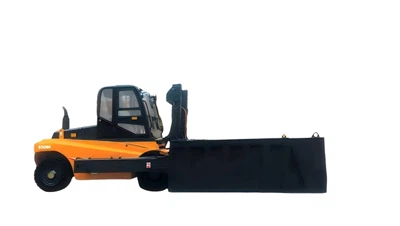
Don’t let the fear of hidden costs or unreliable machines stop you from getting the equipment you need. Used rough terrain forklifts are a smart, cost-effective investment when you buy from a trusted source, and we’re here to make sure you get exactly what you need to keep your business moving forward.
Telescopic Forklift References
Occupational Safety and Health Administration. (2022). Powered Industrial Truck Standards. U.S. Department of Labor.
Equipment World. (2023). Used Heavy Equipment Market Trends and Valuation Guide. For construction and agricultural equipment operators.
American Society of Agricultural and Biological Engineers. (2021). Rough Terrain Equipment Safety and Maintenance Protocols. Standard for off-road industrial equipment.
Fujian SOCMA Machinery Manufacture Co., Ltd.
Fujian SOCMA Machinery Manufacture Co., Ltd. is one of the most professional rough terrain forklift manufacturers and suppliers in China. We warmly welcome you to buy customized rough terrain forklift made in China here from our factory. If you have any enquiry about cooperation, please feel free to email us.
Address: Taiwanese Investment Area, Quanzhou, Fujian, China
E-mail: marketing@socmamarketing.com
WebSite: https://www.socma-forklift.com/
