Let’s cut to the chase: I get this question every single week from customers who order our SPC wall panels. Last month, a couple from Des Moines reached out at 9 a.m. on a Monday, panicking because they’d pulled the trigger on a 250-square-foot order for their basement bathroom and suddenly realized their YouTube tutorial didn’t account for the grout lines the sales rep mentioned. Another customer— a contractor who’d been tiling for 12 years—message me last week asking if he could skip the step of prepping the subfloor because he “knew his way around a level.” SPC Wall Panel
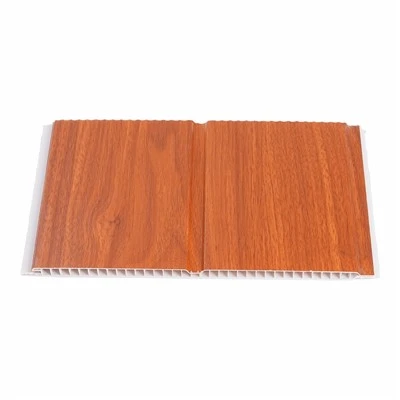
That’s why I’m sitting down to write this, straight from our warehouse breakroom where the coffee’s just strong enough to power through a Friday afternoon lull. The question is simple: Do you need professional help to install SPC wall panels? The short answer? It depends—on your DIY experience, how detailed you read the product specs, and how much you value not having to sand down a lumpy subfloor at 10 p.m. when you realize you messed up the layout. The long answer? Let’s break this down like we’re walking through a customer’s actual installation, no fluff, no corporate jargon, just what I’ve seen over three years in the SPC wall panel business.
First, let’s ground this in what SPC wall panels actually are, because a lot of people still mix them up with vinyl or laminate. From a manufacturing standpoint, SPC stands for Stone Plastic Composite—they’re made with natural limestone powder, polyvinyl chloride, and a stabilizer core that’s rigid, water-resistant, and way heavier than a standard vinyl wall plank. Our panels are 6mm thick, have a 0.5mm wear layer, and click together with an interlocking system that’s supposed to make installation straightforward. But here’s the thing: That “straightforward” label only applies if you don’t skip the prep steps.
Let’s start with the DIY test. If you’re the person who’s installed a floating floor, hung a shelf without drilling through the drywall, and can level a table without asking Google—you’re probably fine. We’ve had hundreds of customers with that exact skill set send us photos of their finished laundry rooms, bathrooms, and accent walls with zero issues. Last quarter, a teacher from Phoenix told us she installed her entire kitchen backsplash over a weekend, working after her 8 a.m. to 3 p.m. class, because she didn’t want to pay a contractor the $80 an hour her neighbor quoted. But here’s the fine print: Even experienced DIYers run into snags with SPC panels because they’re rigid. A lot of vinyl planks flex if you nudge them wrong, but SPC won’t. If your wall is even a little out of plumb (we’re talking 1/32 of an inch over 8 feet—super common in older homes), that rigid core will make the panels look uneven. You can’t “muscle” an SPC panel into place like you would with peel-and-stick tile. That’s where a lot of DIYers mess up. They skip the step of using a straightedge to mark the wall, or they don’t shim small gaps, and by the time they get to the last panel, the whole row is off by a quarter inch.
Now, let’s talk about the cases where professional help is non-negotiable. First, if this is your first time working with any kind of click-lock wall product—stop what you’re doing and at least consult a local installer. We had a customer in Seattle last year who installed SPC panels over his bathroom’s old tile, and didn’t account for the tile’s uneven grout lines. By the end of the first row, the panels were bowing, and he ended up calling a pro to pull all of them out and start over. The pro charged him $1,200, which is more than the SPC panel order itself. For someone who’s never installed this type of product, the learning curve is steep. You have to cut the panels precisely—too short and you’ll have gaps, too long and you’ll crack the rigid core. You also have to know how to handle the transition pieces for doors, corners, and outlets, which are small, easy to misalign, and if done wrong, will make the whole install look unprofessional.
Another big one: If your space has special challenges. For example, if you’re installing SPC panels in a commercial space like a small café or a retail shop, where you need the install done in one weekend to avoid losing business. Or if you’re working with a very large space—say, a 1,500-square-foot living room wall that’s 20 feet wide. A professional installer will have the tools to cut panels quickly, keep the layout consistent, and fix any small issues before they turn into big problems. We had a customer who owned a coffee shop in Austin who tried to do his own install and ended up closing for two extra days because he kept messing up the outlet cuts. A local installer he hired had those cuts done in an hour, and the whole space was ready to open on time.
Let’s also talk about the mistakes that DIYers make that cost them more in the long run. I remember a customer from Detroit who installed SPC panels in his basement bathroom. He didn’t seal the edges around the shower, and after two months, water seeped behind the panels, and the adhesive he used (he picked it up at the local hardware store, not the one we recommend) started to fail. By the time he noticed, the panels were warped, and he had to tear the whole wall out. A professional installer would have known to use a waterproof adhesive specifically made for SPC panels, and would have sealed the corner joints with a silicone caulk that’s designed for high-moisture areas. That’s not something you learn from a 10-minute YouTube video.
Wait, but let’s be fair—professionals have their own pros and cons. A lot of people hear “professional help” and think it’s way too expensive, and for some small projects, it is. If you’re doing a 100-square-foot accent wall in a bedroom, installing SPC panels is easy enough to do yourself. The cost of a professional would be more than the cost of the panels and tools combined, which doesn’t make sense. But for bathrooms, kitchens, commercial spaces, or any space with high moisture or heavy foot traffic, the $500-$1,000 you’ll pay a professional is worth it to avoid the hassle of redoing the whole thing.
Let me share a recent example that sums this all up. Last month, we had two customers order the same 200-square-foot SPC wall panel kit for their master bathroom. One was a DIYer in Indianapolis who’d installed laminate floors before. He messaged us three weeks later saying he’d finished the install, but had a noticeable gap in the back corner of the shower, and one panel had a small crack because he cut it with a regular utility knife (not the scoring tool we recommend). The other customer was a homeowner in Cleveland who hired a local installer. She sent us a photo a week later, and the bathroom looked like a high-end remodel—no gaps, no cracks, the grout lines were perfectly aligned, and it was ready to use immediately. The installer charged her $850, which is about the cost of the panel kit plus installation tools, but she told us it was worth it because she didn’t have to spend hours cutting panels or troubleshooting on the weekend.
Here’s what I’ve learned from three years selling SPC wall panels: The “do it yourself or hire a pro” decision isn’t about skill alone—it’s about risk. If you’re willing to spend a weekend researching prep steps, buying the right tools (most DIYers don’t have a SPC scoring tool or a tap block, which are essential), and troubleshooting small issues as they come, you can absolutely do it yourself. But if you’d rather have someone handle the heavy lifting, the precise cuts, and the edge sealing that will make your SPC panels last 15+ years (which they will, if installed correctly), then a professional is the way to go.
I should also add that we always provide a detailed installation guide with every order, plus access to our customer support team—we’ve got installers on staff who can answer questions about layout, adhesive, and cutting, so even if you’re a DIYer, you don’t have to go it alone. We’ve had DIYers call us at 7 p.m. panicking because they measured wrong, and we talk them through re-cutting the panel without cracking it. That support is free, which is a big perk for anyone who’s on the fence.
So, to circle back to the original question: Do you need professional help to install SPC wall panels? No, not if you’re comfortable with basic DIY, willing to follow the exact installation steps (skip none—no, really, don’t skip the subfloor leveling), and don’t mind investing in the right tools. Yes, if you’re installing in a high-moisture space, have never worked with click-lock wall panels, or want the install done quickly and perfectly without the hassle.
At the end of the day, our job as an SPC wall panel supplier isn’t to push pros or DIYers—it’s to make sure you make a decision that works for your space, your timeline, and your budget. If you’re ready to get started, we’re here to answer questions, walk through the installation, and connect you with trusted installers in your area if you decide professional help is the right move. We stand behind our panels, and we want you to be happy with the end result—whether you install them yourself or have someone else do it.

Now, if you’re ready to order or talk through your specific project, feel free to reach out. We’re here to help every step of the way.
SPC Floor References:
- National Kitchen & Bath Association. (2022). SPC Wall Panel Installation Best Practices. NKBA Industry Guidelines.
- Tile Council of North America. (2021). Rigid Core Wall Panel Installation for Residential and Commercial Spaces. TCNA Handbook.
- Stone Plastic Composite Manufacturers Association. (2023). SPC Product Specifications and Installation Requirements. SPCMA Technical Bulletin.
Shandong Diman International Trade Co., Ltd.
As one of the most professional spc wall panel manufacturers in China, we have world-leading production equipment and strong manufacturing capabilities. Please rest assured to buy high quality spc wall panel made in China here from our factory. Customized orders are welcome.
Address: Lanshan District, Linyi City, Shandong Province, China.
E-mail: hkshangmao@gmail.com
WebSite: https://www.dimanwpc.com/
