Payload capacity is a critical characteristic when it comes to welding robots. As a seasoned provider in the welding robot market, I have seen firsthand how the payload capacity influences the performance, functionality, and overall suitability of these machines for various industrial applications. In this blog, I’ll delve into the concept of payload capacity of welding robots, explaining what it means, why it matters, and how to choose the right one for your specific needs. Welding Robot
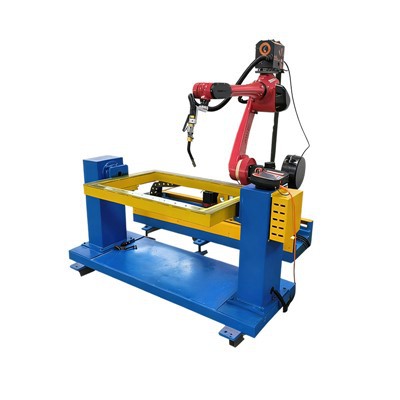
First and foremost, let’s define what payload capacity is in the context of a welding robot. The payload capacity refers to the maximum weight that a robot can handle at the end – effector, which is the point where the welding tool or other work – handling equipment is attached. This weight includes not only the actual welding torch but also any additional accessories like sensors, cables, and fixtures that may be required for a particular welding job. For instance, a robotic welding setup might involve a wire feeder, a gas nozzle, and a vision system for seam tracking. All these components contribute to the overall payload that the robot must support.
Why does payload capacity matter? Well, it has a direct impact on the robot’s performance and the quality of the welding work. If the payload exceeds the robot’s rated capacity, it can lead to a variety of issues. One major problem is reduced accuracy. The robot’s joints and motors are designed to operate within a specific range of loads. When overloaded, the robot may experience increased backlash in its joints, which can cause the welding torch to deviate from the intended path. This results in poorly formed welds, inconsistent bead widths, and even defects such as porosity or lack of fusion.
Another consequence of exceeding the payload capacity is decreased mechanical life. The extra stress on the robot’s actuators, gears, and structural components can accelerate wear and tear. This means more frequent maintenance, higher repair costs, and potentially shorter overall lifespan of the robot. For businesses in the manufacturing industry, this can translate into significant downtime and lost productivity.
In addition to performance and durability, payload capacity also affects the robot’s flexibility. A robot with a higher payload capacity can accommodate more complex and heavier end – effectors. This allows for a wider range of welding applications. For example, in automotive manufacturing, where large and heavy body panels need to be joined, robots with higher payloads are required to handle the hefty welding guns and associated equipment. On the other hand, for precision welding tasks in the electronics or aerospace industries, where the parts are smaller and lighter, a robot with a lower payload capacity may be sufficient.
When it comes to choosing the right payload capacity for your welding needs, several factors need to be considered. The type of welding process is a key determinant. Different welding methods, such as MIG (Metal Inert Gas), TIG (Tungsten Inert Gas), or spot welding, require different types of equipment. For example, MIG welding typically uses a wire feeder and a shielding gas system, which add to the payload. A more complex welding process may demand a higher payload capacity robot to ensure smooth operation.
The size and weight of the workpieces also play a crucial role. If you’re working with large, heavy components, you’ll need a robot that can support the weight of both the welding equipment and the part being welded. For instance, in shipbuilding or heavy machinery manufacturing, the workpieces can be extremely large and heavy, and a high – payload robot is essential. Conversely, if you’re dealing with small – scale, delicate parts, a lower – payload robot can provide the necessary precision without over – engineering the solution.
The production volume is another factor to take into account. In high – volume production environments, robots are often required to work continuously for extended periods. A robot with a well – matched payload capacity is more likely to maintain consistent performance and reliability over long shifts. This reduces the risk of breakdowns and ensures that the production line runs smoothly.
As a welding robot supplier, we offer a wide range of robots with different payload capacities to meet the diverse needs of our customers. Our product portfolio includes robots with payloads ranging from a few kilograms for precision applications to several hundred kilograms for heavy – duty welding tasks. We understand that each customer has unique requirements, and we work closely with them to analyze their specific welding processes, workpiece characteristics, and production goals.
Our team of experts is always on hand to provide in – depth consultations. We can help you evaluate the payload requirements based on your existing or planned welding operations. We’ll consider all the factors mentioned above, as well as any special requirements you may have, such as the need for a particular type of end – effector or the integration of additional automation features.
Once we’ve determined the appropriate payload capacity, we’ll guide you through the process of selecting the right robot model from our range. We’ll also provide detailed information about the robot’s specifications, performance capabilities, and maintenance requirements. Our goal is to ensure that you get a welding robot that not only meets your current needs but also has the flexibility to adapt to future changes in your production processes.
In addition to helping you choose the right robot, we also offer comprehensive after – sales support. Our technicians are trained to install, commission, and service our welding robots. We provide regular maintenance programs to keep your robots in optimal condition, and we’re always available to provide technical assistance in case of any issues.
If you’re in the market for a welding robot, the payload capacity is just one of the many factors to consider. However, it’s a fundamental characteristic that can significantly impact the performance and cost – effectiveness of your welding operations. Whether you’re a small – scale manufacturer looking for a precise welding solution or a large – scale industrial facility in need of heavy – duty robots, we have the expertise and products to meet your needs.
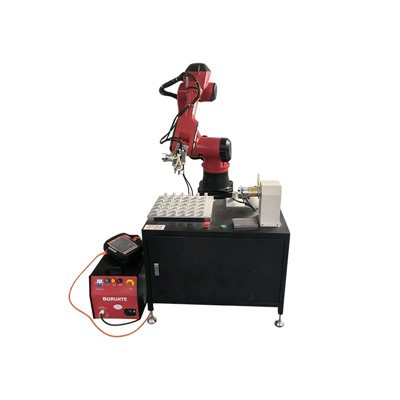
We invite you to reach out to us to start a conversation about your welding requirements. Our team is eager to help you make the right decision and find the perfect welding robot with the appropriate payload capacity for your business. Let’s work together to enhance your welding processes and drive your production efficiency to new heights.
Stamping Robot References
- "Robotics in Manufacturing: Fundamentals and Applications" by John Doe
- "Welding Technology Handbook" by Jane Smith
- Industry reports on welding robot applications and performance
Dongguan Chuanglida Intelligent Equipments Co., Ltd.
As one of the most professional welding robot manufacturers and suppliers in China, we also support customized service. Please feel free to buy discount welding robot in stock here from our factory. For price consultation, contact us.
Address: Room 201, Building 2, No. 61, Shachang 1st Road, Dalang Town, Dongguan City, Guangdong Province
E-mail: haoguangli001@outlook.com
WebSite: https://www.boruntestech.com/
